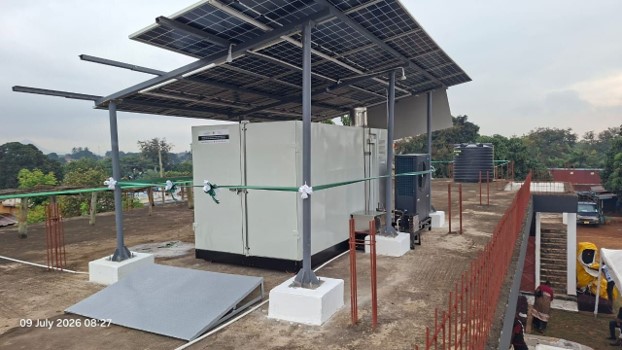
SESCOM has helped turn a UK–Tanzania research partnership into a working dryer that Tanzania can build, own and maintain for itself.
On the morning of 9 July 2026, as the Morogoro District Commissioner cut the ribbon on a new solar hybrid dryer at the Morogoro Food Processors Cluster Initiative (MFPCI), the national electricity grid went down. It was an unplanned interruption to a carefully planned ceremony and, as it turned out, the most convincing demonstration the project could have asked for. The dryer, drawing on its own solar panels and battery storage, simply kept running. For a machine built on the promise of reliable, off-grid drying for farmers and processors who often have no grid connection at all, there could hardly have been a more fitting way to mark its first day in service.That dryer is the outcome of SolarSAVER2 (SS2), a two-and-a-half-year project funded through Innovate UK's Energy Catalyst programme and delivered by a six-partner consortium spanning the UK and Tanzania. SESCOM Limited led the project's manufacturing and in-country deployment work, alongside the Tanzania Horticultural Association (TAHA), UK project lead Biopower Technologies, Brunel University London, Sematics Limited and AgriFoodX Limited.
The Problem Drying was Meant to Solve
Across much of rural Tanzania, produce is still dried on open wooden racks or in simple plastic-tunnel structures methods that leave fruit, vegetables and spices exposed to dust, insects and rain, and that depend entirely on strong, uninterrupted sun. Where proper drying facilities exist at all, they are often undersized, poorly designed or available only for rent. The result is a familiar story for smallholder farmers: produce that spoils within days of harvest, or that must be sold fresh and cheap to middlemen because there is no way to preserve it.
The opportunity on the other side of that problem is considerable. Africa's food market is forecast to reach US$1 trillion by 2030, up from around US$300 billion today, and demand for food across the continent is projected to double by 2050. Some 33 million smallholder farms already supply around 70 percent of Africa's food. TAHA's own network of more than 1,700 horticultural producers, processors, exporters and suppliers represents immediate demand for over 400 drying units on its own a figure that, extrapolated across sub-Saharan Africa, points to a market in the hundreds of thousands.
An earlier project, SolarSAVER1, had already shown that an integrated off-grid solar system could dry produce to a high standard in Tanzania, leaving a working unit at Kilimanjaro. SolarSAVER2 was funded to take that proof of concept and turn it into something that could actually be manufactured in Tanzania, supported locally, and sustained long after the project funding ended.
Building Something Tanzania Replicate
The SS2 dryer combines a solar photovoltaic array and battery storage, a CO₂ heat pump, an insulated drying chamber, and a touchscreen control system developed by Sematics that gives operators automated drying-time recommendations, live monitoring and remote-support capability. The heat pump means the dryer works in all weather and after dark, rather than only in strong sun the central limitation of the tunnel dryers it is meant to replace.
Design priorities were set directly by the people who would use it: the dryer needed to be affordable for farmer groups and small processors, built so that spare parts would be locally available, usable in any weather, straightforward to operate, and manufacturable in Tanzania from largely local materials. Those last two conditions were not incidental end users named local manufacture, local sourcing and local repair as the deciding factors in whether they would adopt the technology at all.
To get there, the consortium deliberately separated design authority from manufacturing authority. Brunel University London and Sematics proved the engineering in a controlled UK setting, building and instrumenting a reference unit at Brunel that ran entirely off-grid through a full testing programme drying carrots from 86 to 6 percent moisture, spinach from 88 to 6.5 percent, and green chillies down to as low as 3 percent, all without a grid connection. SESCOM then rebuilt the design in Tanzania using components it could actually source, adapting it where local supply or cost demanded repositioning the heat pump externally, for instance, which cut the ducting the system needed from five dampers to two. TAHA, meanwhile, supplied the end-user relationships that determined where the unit would go and who would run it. That division of labour is what allowed the project to finish with a dryer Tanzania can build again, rather than one that had simply been shipped in.
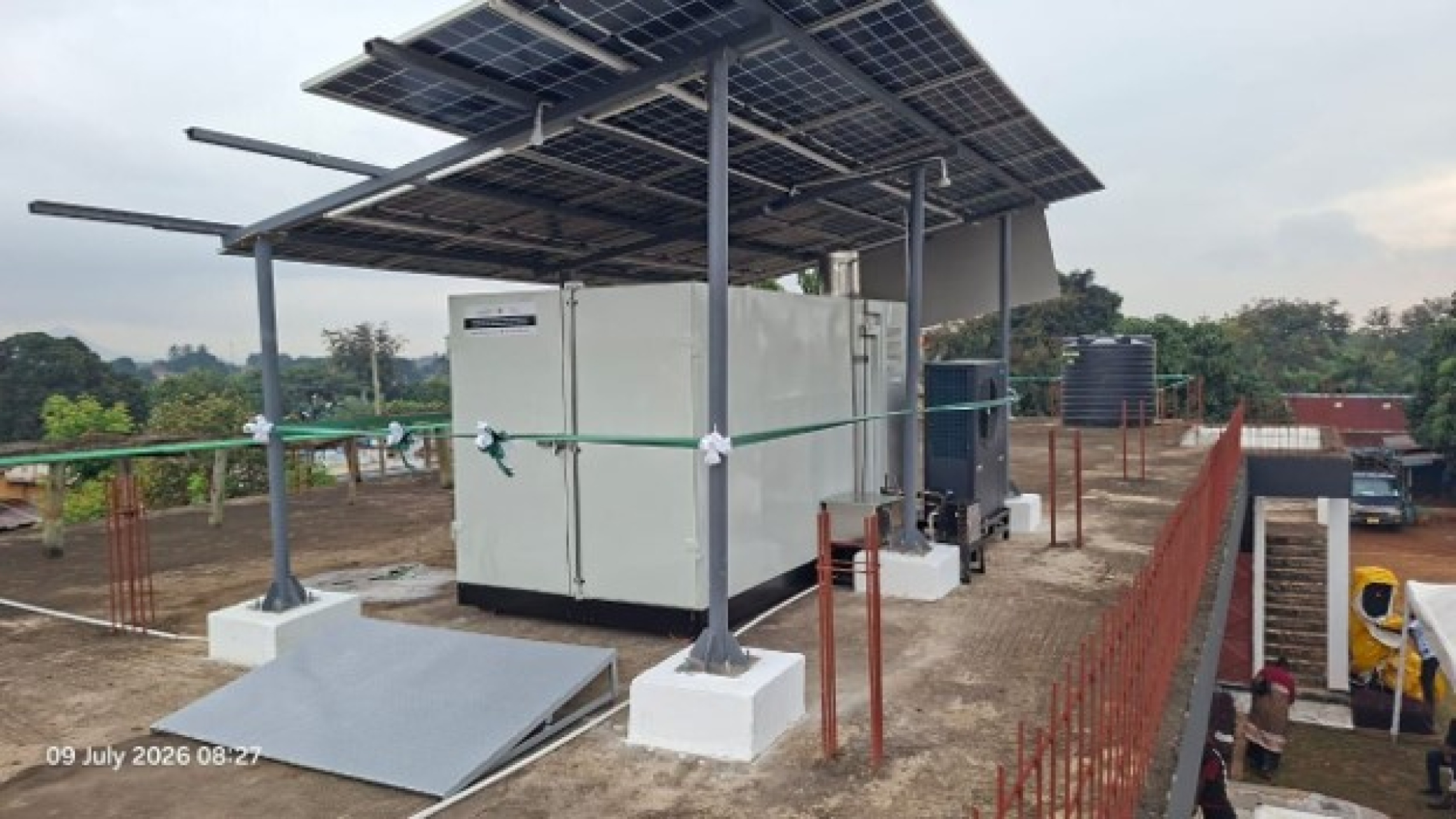
The completed SS2 dryer with its solar PV canopy, fabricated and assembled in Tanzania.
SESCOM's build drew on its own long track record the company has fabricated more than 200 solar dryers of various sizes across Tanzania and trained customers in their operation and maintenance. For SS2, that meant sourcing multiple quotations from local and international suppliers, visiting local workshops to verify their capability, building the drying chamber's insulated walls and airtight door fittings locally, and installing a 7.56 kW solar PV system together with the heat pump, heat exchanger and control electronics on site.
Handover Day in Morogoro
The Morogoro Food Processors Cluster Initiative was chosen as the deployment site after a careful comparison with an alternative site in Tanga. Morogoro offered an existing concrete slab suitable for the dryer and its PV structure, a cluster of 150 active processors the majority women and youth with proven processing capacity and prior experience supplying export markets. A joint SESCOM and TAHA site visit confirmed excellent solar exposure, and an independent structural assessment confirmed the slab could safely carry the dryer and its panels.
Before the unit arrived, TAHA delivered food safety training to the processor group as a prerequisite for receiving it. SESCOM then trained seven operators four men and three women on-site, covering operation, the touchscreen controls, drying procedures, troubleshooting, preventive maintenance, hygiene and occupational safety. The dryer was formally handed over to MFPCI under a signed memorandum of understanding covering its ownership, management, operation and maintenance Tanzania's first locally developed solar hybrid dryer to enter service.
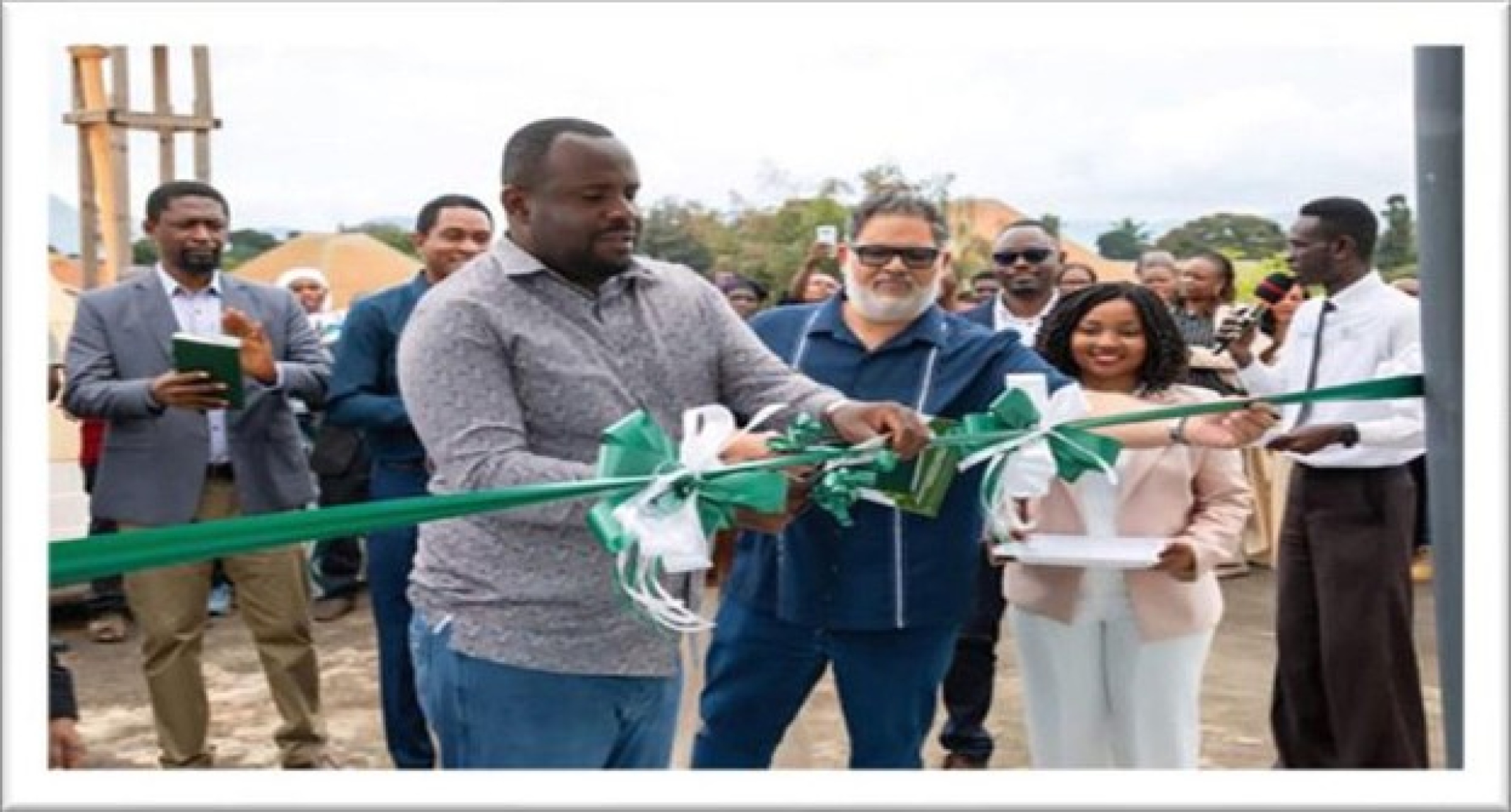
Ribbon-cutting at the handover ceremony, officiated by the Morogoro
District Commissioner, 9 July 2026.
During commissioning, the dryer completed drying runs in roughly two to five hours with consistent, high-quality results, protecting produce from dust, insects and rain throughout and operating across a range of horticultural crops in all weather. Anticipated benefits for processors using the technology include post-harvest losses cut by 40 to 60 percent, drying times reduced by 50 to 70 percent, and electricity consumption cut by 60 to 80 percent compared with existing methods, alongside better product quality, expanded access to domestic and export markets, and greater participation of women and youth in processing enterprises.
The project has also been candid about where work remains. In first-phase trials run by TAHA, 500 kilograms of amaranth and sweet potato leaves were dried over three consecutive days at different loading levels. Some batches did not reach the required drying standard within the programmed time, drying was uneven between tray positions, and battery performance at full chamber capacity needs further attention. None of this is a surprise the uneven drying between tray positions had already been identified and quantified during the UK testing programme and it marks exactly the kind of evidence the project was designed to generate. SESCOM is now carrying out further technical optimisation and systematic testing at the Morogoro site as the facility moves from installation into full beneficiary-led operation.
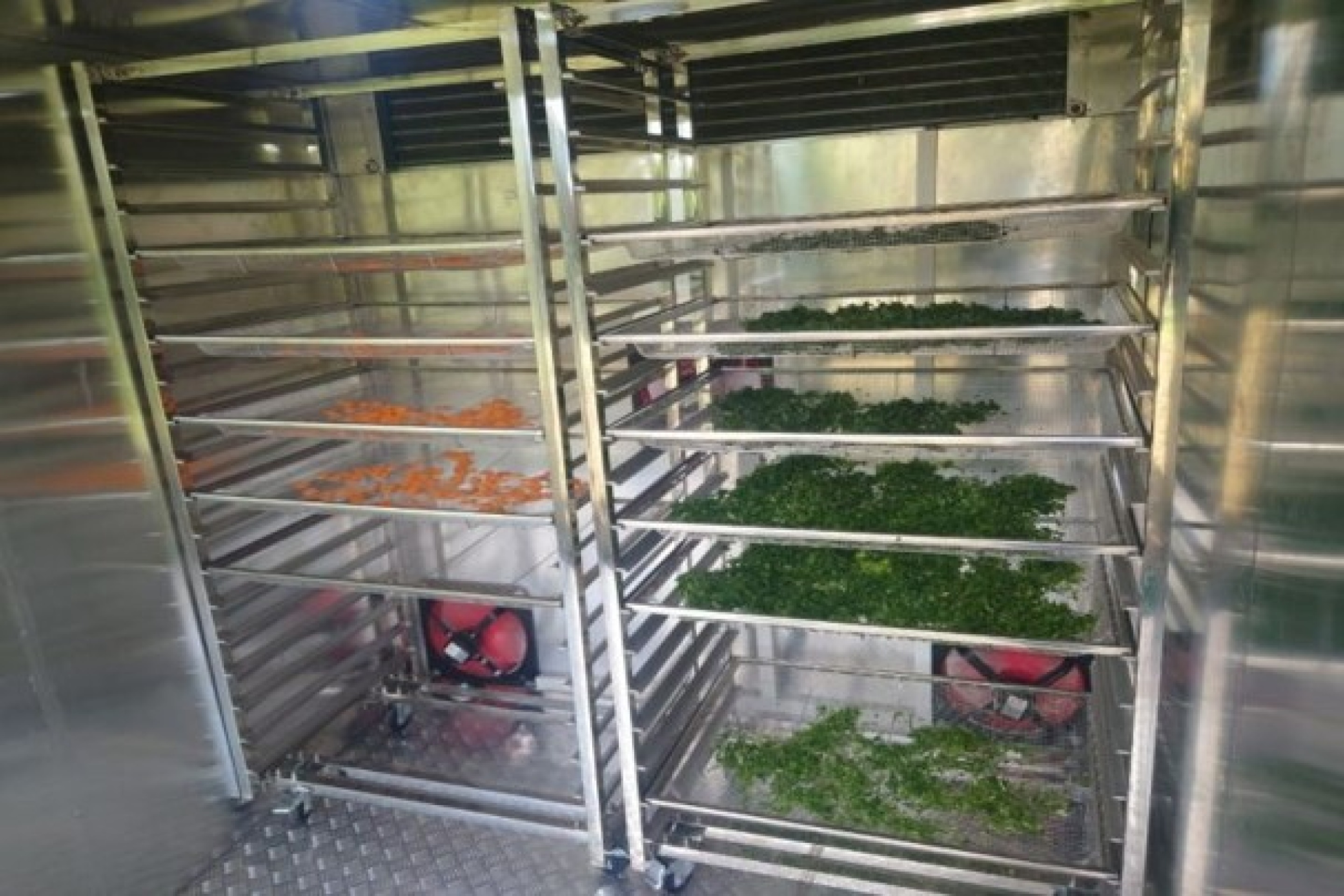
Leafy produce loaded on the dryer's steel mesh
trays during first-phase trials
A Wider Push on Food Safety and Skills
Because a dryer is only as good as the practices around it, AgriFoodX Limited worked throughout the project on the food safety side of the technology, advising on sensor placement, cold-spot identification and pest-exclusion features built into the Tanzanian unit itself. The partnership produced fifteen short training videos each under ten minutes, in plain English to ease translation into Swahili covering everything from safe produce handling and dryer operation to cleaning protocols and safe storage, aligned with international Codex Alimentarius food safety standards. AgriFoodX has committed to continuing to support HACCP guidance and training beyond the life of the project, and the videos remain available to all partners.
That training was part of a much broader capacity-building program that TAHA and SESCOM ran in parallel with the engineering work. Across the project's lifetime, 848 spice and fruit farmers in Arusha and Kilimanjaro were trained in sustainability standards; 350 farmers and processors were assessed against international food safety compliance standards; 290 farmers in the Pwani region were trained in entrepreneurship and packaging; 210 spice farmers in Morogoro were trained in smart horticulture and post-harvest handling 54 percent of them women and 182 cluster members received business development training, 91 percent of them women. The project also reached national audiences: TAHA's Horticulture Business and Investment Summit in Dar es Salaam drew more than 400 participants in person and over 1,700 online, with the Permanent Secretary of the Prime Minister's Office as the guest of honour, and SolarSAVER-supported processors exhibited their products at trade fairs in Dar es Salaam, Tanga and Morogoro.
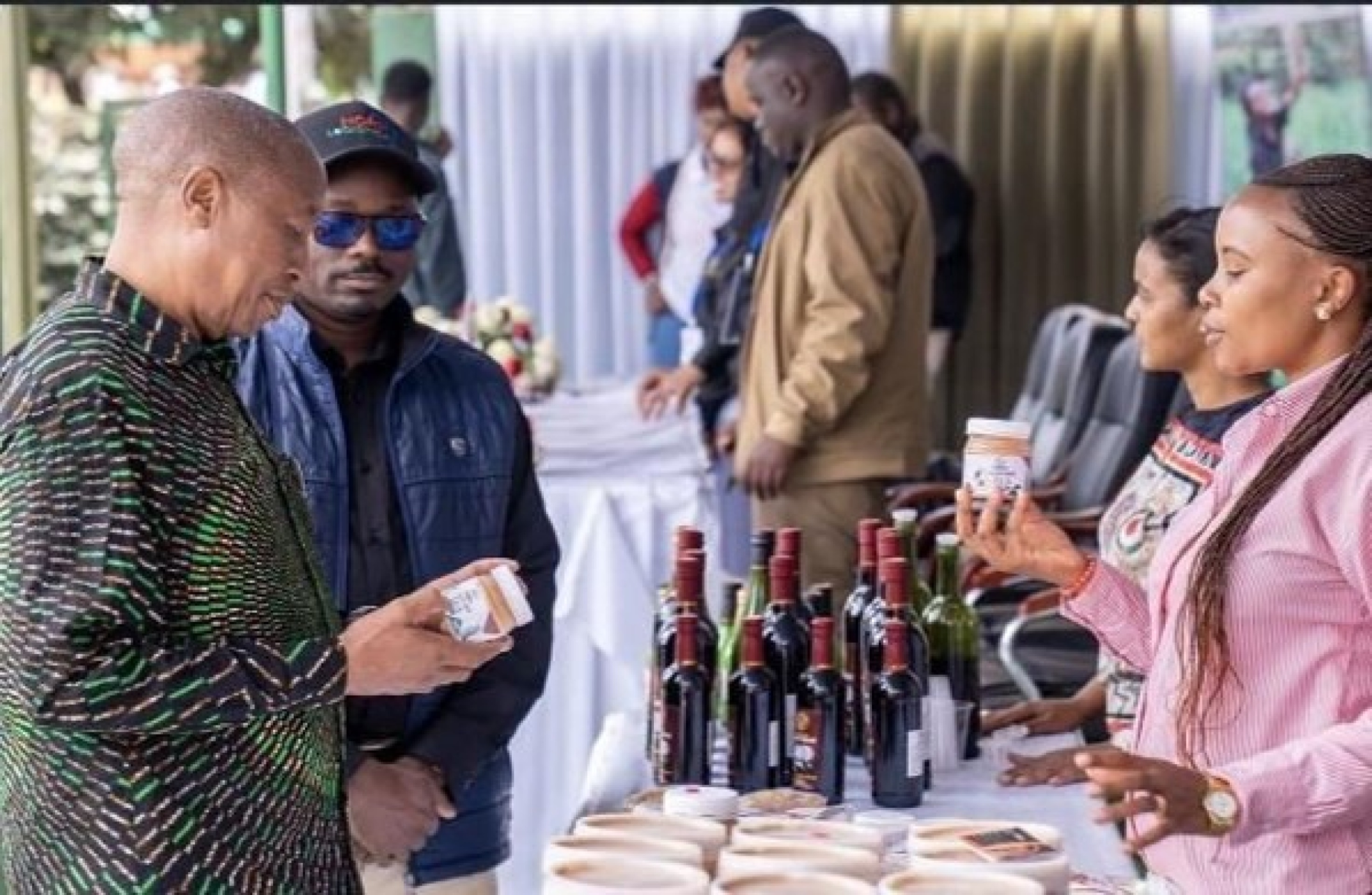
TAHA Supported Seven Women
Processors to Exhibit Value-Added Products at the Nane-Nane National Agricultural
Fair
What Comes Next?
The project's five original aims a manufacturable low-carbon drying design, a piloted system with a local partner, a viable business model, embedded food safety practice, and evidence of impact on farming families were substantially delivered by the project's close in September 2026, with the impact assessment continuing under TAHA's leadership. A second hybrid unit has already been fabricated in Tanzania and redesigned to draw on two different heating sources rather than one, a change made after the project twice ran into delays sourcing a single imported heat pump. That dual-source design is, if anything, a more commercially resilient product than the first unit a lesson learned and built directly back into the next one, which is expected to be fully integrated and tested once its heat pump arrives.
Beyond the hardware, a licensing model, commercial structure, patent report, and exploitation plan are now in place, and SESCOM has identified supply-chain partners for the components most critical to future builds. TAHA is finalizing the business model for how processor groups will own, operate, and pay for the dryers. Conversations are underway with the Carbon Trust on end-user finance options that would allow farmer groups to access the technology without paying the full purchase cost upfront.
For SESCOM, the significance of SolarSAVER2 goes beyond one dryer in one town. It is a demonstration, tested in the field rather than claimed on paper, that clean energy technology for Africa's food systems can be designed, adapted and built in Africa with the skills, supply chains and ownership to keep it running long after the project that funded it has ended. As the project's own closing assessment puts it: SolarSAVER2 set out to turn a proven prototype into something Tanzania could build, own and operate for itself. It closes with that unit in service in Morogoro, drying produce for a community of processors and, on the day it mattered most, running on nothing but the sun.
SolarSAVER2 (IUK 10073159) was funded by Innovate UK under the Energy Catalyst programme, May 2024–July 2026, with a total project value of £814,629. The consortium comprised Biopower Technologies Limited (lead), Brunel University London, Sematics Limited and AgriFoodX Limited in the UK, and SESCOM Limited and the Tanzania Horticultural Association (TAHA) in Tanzania.